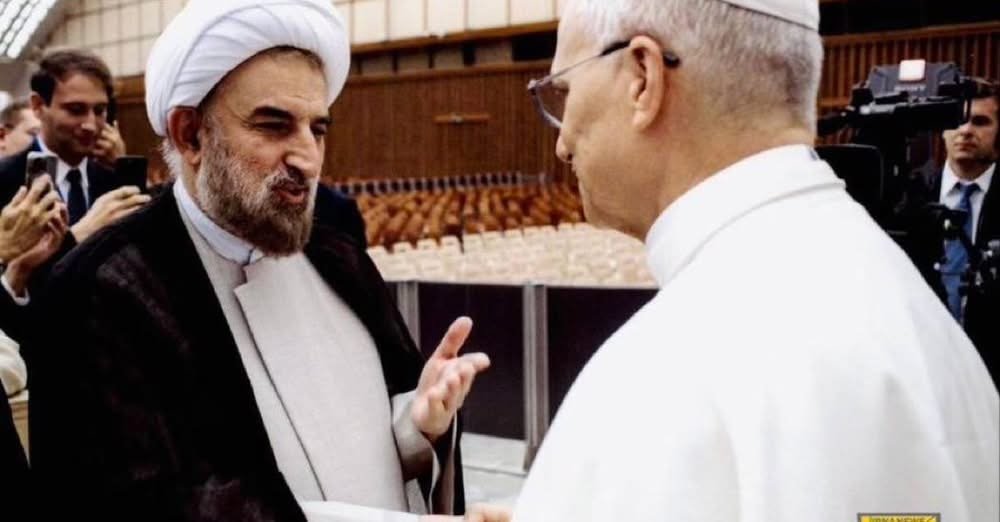
A few days ago, I watched a video by Father Adrien titled “Why I Am Not an Evangelical Christian.” I’ll respond here by explaining why I could never align myself with the church he represents. There are many reasons, but one stands out. I’m not anti-Catholic by default, nor do I consider myself a Protestant or an Evangelical. Yet, at some point, there are things I simply cannot understand. Here’s one of them:
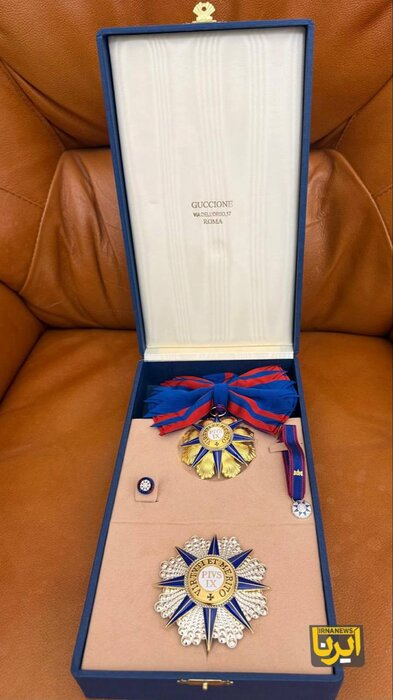
The pontifical decoration awarded by Pope Leo XIV to the Iranian ambassador to the Holy See. It fits into a tradition cherished by Father Adrien—one where the Vatican honors individuals who have contributed to inter-institutional dialogue or humanitarian causes. This distinction, granted at the end of the ambassador’s diplomatic mission, symbolizes the Holy See’s commitment to maintaining open dialogue with Iran, even amid a complex geopolitical context.
For Tehran, this recognition is a significant communication asset, both for Western public opinion and its own population.
It also confirms that the Vatican treats Iran as a diplomatic equal, despite regional tensions and deep theological and political differences between the two states.
In short, this medal is not just an individual honor but a strong signal from the Pope in favor of dialogue and diplomacy, even in difficult contexts. Up to this point, one might think all is well… and yet. …
The Iranian regime actively persecutes Christians, particularly converts from Islam. Here’s the reality in 2026:
Converted Christians are the most vulnerable—they face arrests, torture, imprisonment, and are often accused of being “traitors,” “enemies,” or “Zionists.” House churches (where converts gather, as official churches are off-limits to them) are frequently raided by police. For example, in July 2025, 54 Christians were arrested across 21 Iranian cities, and in April 2025, two men were sentenced to 12 years in prison for possessing Bibles.
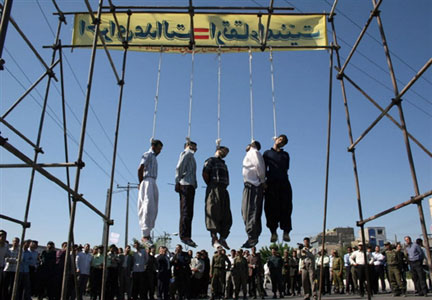
1639
executions in
2025 !
Repression has intensified since late 2025, with internet blackouts and heightened restrictions making the plight of Christians nearly invisible to the outside world. Iranian authorities label Christians a “threat to national security” and accuse them of being agents of Israel or Western powers.
Historic Christian communities (Armenian and Assyrian) are recognized, but their freedoms are severely limited. Converts, however, have no rights and must practice their faith in secret, risking legal persecution.
In short, the persecution of Christians in Iran is systematic—especially for converts—and has worsened in recent months.
Pope Leo XIV’s decision to honor the Iranian ambassador, despite the well-documented persecution of Christians in Iran, is paradoxical, even shocking, to many believers across all Christian denominations and beyond.
The Vatican often operates under a diplomatic logic separate from immediate moral concerns. The idea is that maintaining dialogue helps protect persecuted minorities… Yet this strategy raises serious ethical questions. How can one reconcile honoring a representative of a state that imprisons and tortures its own people—including Christians—with the duty of solidarity toward the persecuted?
For victims and their families, such a distinction feels like betrayal—a normalization of oppression. The risk is giving the impression that the suffering of the faithful is being sacrificed on the altar of Realpolitik.
The Vatican seeks to remain a neutral actor, open to dialogue even with the most authoritarian regimes—those systematically committing crimes against humanity. But this unjustifiable neutrality comes at a high cost for Rome. Today, it is widely perceived as passive complicity.
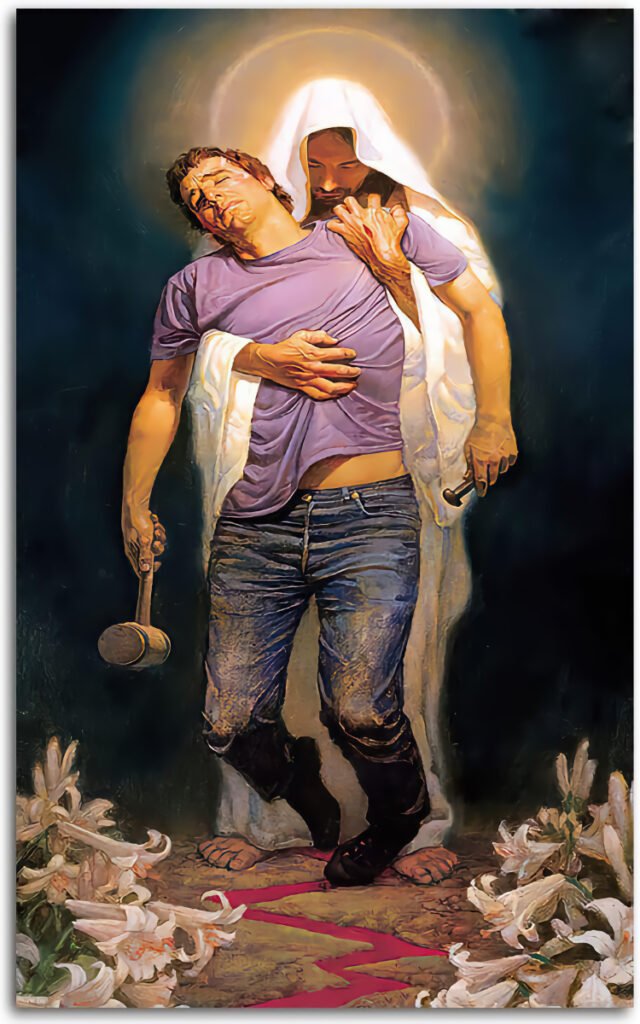
The question lingers, as troubling as it is unavoidable: Could we imagine Christ doing the same???
Le Christ, qui a lavée les pieds de ses disciples, y compris celui qui allait le trahir, qui a choisi de s’identifier aux plus petits, aux persécutés, aux marginalisés. Le Christ, dont l’Église se réclame, mais dont les choix diplomatiques semblent parfois s’éloigner de l’exigence radicale de l’Évangile : aimer ses ennemis, oui, mais sans jamais transiger avec l’injustice.
Honorer le représentant d’un régime qui écrase ses propres citoyens, et parmi eux des frères et sœurs en Christ, c’est risquer de confondre dialogue et compromission. Le Vatican, en cherchant à préserver un canal de discussion, joue un jeu périlleux qui risque de détruire la crédibilité de son message, de la cohérence de son témoignage.
Pour les chrétiens persécutés en Iran, et pour tous ceux qui souffrent sous le joug de l’oppression, la réponse est claire : la solidarité ne peut être silencieuse. Si la diplomatie a ses raisons, la foi, elle, a ses exigences. Et l’une d’elles est de ne jamais laisser l’injustice devenir normale. Alors, non, on ne peut imaginer Christ rester muet où honorer un gouvernement comme celui-ci. Et c’est peut-être là le vrai scandale de l’évangile, mais aussi et la vraie espérance.
Mikaël REALE