

By REALE / August 31, 2026
What If the Real Problem Was Our Inability to Be Parents?
Recently, the French Constitutional Council struck down the law aimed at banning social media for kids under 15. It's a decision that sparked passionate debates. Some see it as a victory for freedom, others as a missed opportunity to protect our children. But what if the real problem lay elsewhere?
This law, as well-intentioned as it may be, was nothing more than a Band-Aid on a bullet wound. Banning access to social media does not resolve the deep educational crisis our families are going through. Children already bypass restrictions using fake birth dates, and platforms—despite their algorithms—cannot replace parental authority.
The question isn't so much whether the State should pass laws, but rather: how did we get here? Why are parents delegating the upbringing of their children to screens, schools, or laws?
Parenting Today: An Endangered Role?
Thirty years ago, in an article titled "Adults or Fathers?", published in Coef 5's magazine Signes, I made an essential distinction: being an adult was relatively common, but being a real parent was already a challenge. Today, the game has changed. Can we even find adults anymore?
Back then, I emphasized that fatherhood (and motherhood) was not just a matter of biology or legal status, but above all a moral and spiritual mission. Thirty years later, this mission seems to have been relegated to the background, if not forgotten entirely. Today's adults struggle to step up into their role as adults, so as for being parents...
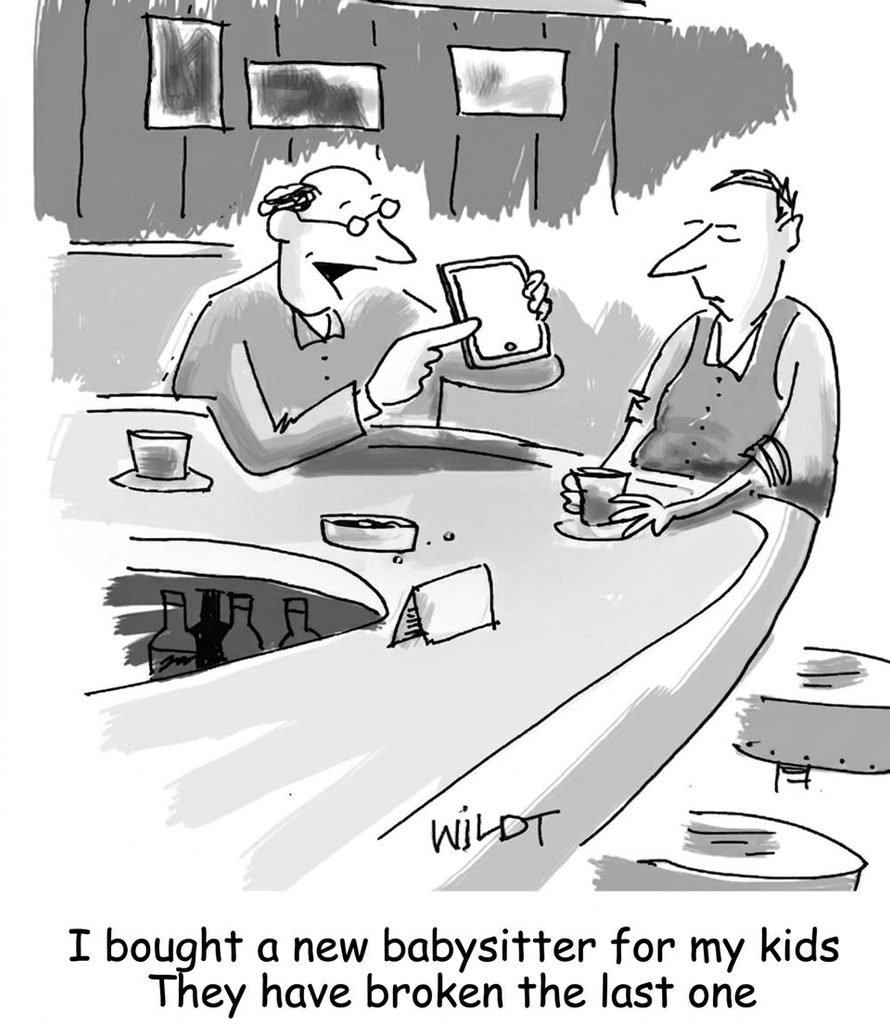
How many exhausted or overwhelmed parents hand a smartphone to their young child just to "get some peace and quiet"?
We no longer step up to our roles. Between school, extracurricular activities, and online influencers, who is actually raising our children?
We want "independent" children, often for selfish reasons, but we forget that independence is built within a framework—with boundaries and reference points.
Today, we have not one, but two generations of children who grew up left to their own devices, exposed to inappropriate content (pornography, hate speech, cyberbullying), and teenagers growing up without any real guidance.
Parenting: A Sacred, Yet Neglected Role
In my 1996 article, I was already referring to parenting as a sacred role. Today, that role seems to have been devalued, if not trivialized. Being a parent isn't just about bringing a child into the world or providing for their material needs. Above all, it is a moral responsibility: passing on values, setting boundaries, and being present.
Yet, several factors have contributed to weakening this mission:
- Economic and Social Pressure: Between work, obligations, and daily stress, many parents no longer have the time or energy to be fully present.
- Individualism: In a society where "me first" has become the norm, sacrificing for others—and especially for one's children—can feel counter to human nature.
- Fear of Doing Things Wrong: Caught between the mandates of education "experts" on TikTok, Instagram, and other purveyors, constant comparisons with other parents, and perpetual guilt, many prefer to avoid conflict rather than assert their authority.
The consequence? Children lacking reference points, teens in search of meaning, and young adults incapable of taking responsibility for their own lives.
The Solution Won't Come from Laws, But from Families
The temptation is strong to look for quick and easy fixes. A law to ban social media? Why not. But that won't be enough. A law is there to provide a framework, but it cannot educate.
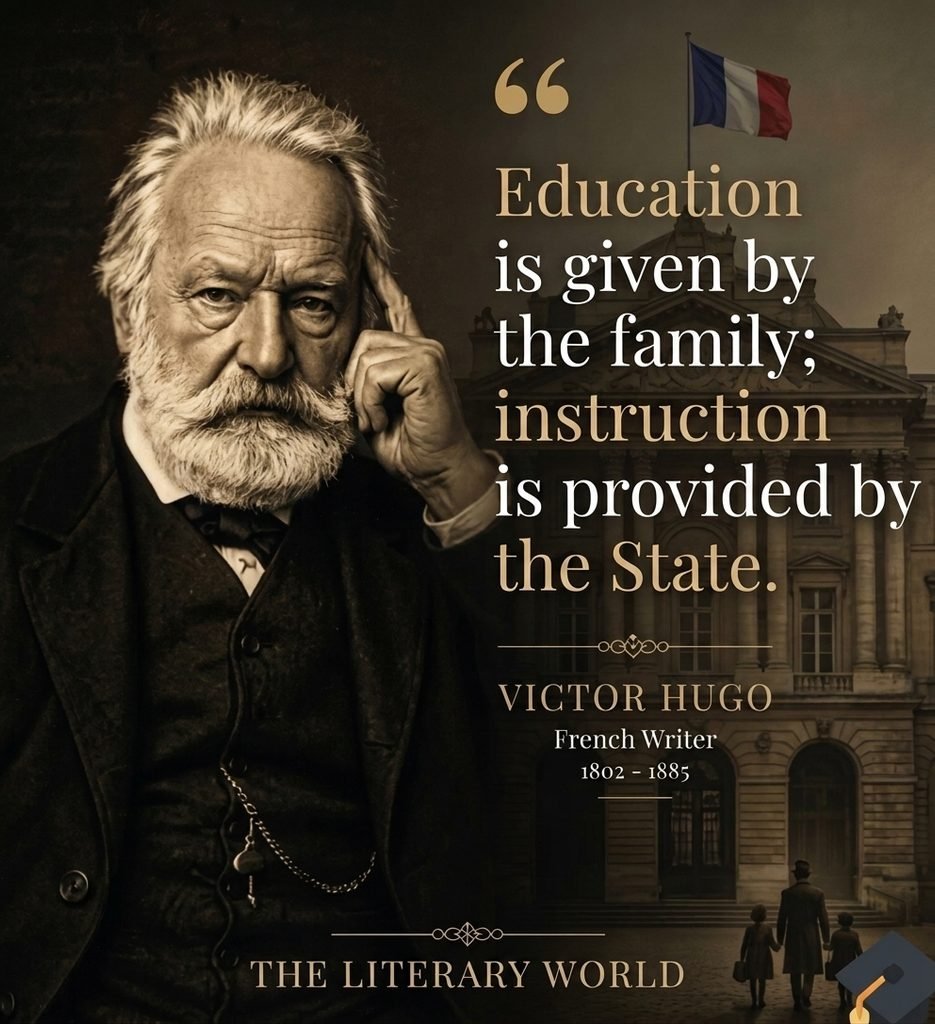
This quote is often used to highlight that moral education and values belong first and foremost to the family, while instruction (formal schooling) is a responsibility of the State. It aligns with Hugo’s humanist and republican thought, which valued both the importance of the family and the role of public school.
The real solution lies in a awakening of consciences. It is time for parents to reclaim their place, set boundaries, and assume their educational role—and stop passing the buck to schools. It is up to parents to lead by example, pass on values, and create an environment where children can grow up safely. Not just any random adult!
The task may seem daunting, but it is vital. Here are a few concrete steps toward reclaiming responsible parenting:
- Accept the Sacrifice Being a parent means giving up a part of your freedom. It means sometimes saying no to a night out with friends to stay with your child. It means turning off your phone to truly listen to what they have to say. It means understanding that love is often measured in actions, more than in words.
- Rethink Your Priorities In a world where work, entertainment, and social media monopolize our attention, it is easy to relegate our children to the background. Yet, nothing will ever replace spending time together. A family meal without screens, a walk in the woods, a serious conversation: these simple moments are the foundation of a solid upbringing.
- Educate and Inform Yourself No one is born a "perfect parent." Fortunately, resources exist: books, workshops, discussion groups. Learning how to manage conflict, set boundaries, or address difficult topics (like pornography or social media) is a duty.
- Lead by Example Children learn far more through observation than through lectures. If you spend all your time on your phone, don't expect your child to do otherwise. If you avoid conflict instead of confronting it, they will do the same. Maturity is caught, not just taught.
Education Is a Sacred Mandate
The Bible, starting from the Old Testament, emphasizes the primary and inalienable responsibility of parents in raising their children. In Deuteronomy 6:6-7, it is written:
"These commandments that I give you today are to be on your hearts. Impress them on your children. Talk about them when you sit at home and when you walk along the road, when you lie down and when you get up."
Here, education cannot be delegated: it is a divine mandate, a mission that falls upon parents before any institution.
Jesus himself, in Matthew 18:6, warns against those who cause children to stumble, highlighting the gravity of adults' responsibility toward them. Educating means protecting, guiding, and passing on a worldview that honors God and neighbor.
The Apostle Paul goes even further in Ephesians 6:4:
"Fathers, do not exasperate your children; instead, bring them up in the training and instruction of the Lord."
This injunction shows that education is not limited to intellectual or moral instruction, but must be steeped in wisdom, patience, and love—always aiming to build up, not to dominate.
Mikaël Réale
Recent Comments