
« Who may dwell in your sacred tent? Who may live on your holy mountain? The one whose walk is blameless, who does what is righteous, who speaks the truth from their heart.»
Psaume 15 : 1-2
The exercise of power within a democratic society relies on an implicit yet fundamental contract: the delegation of trust...
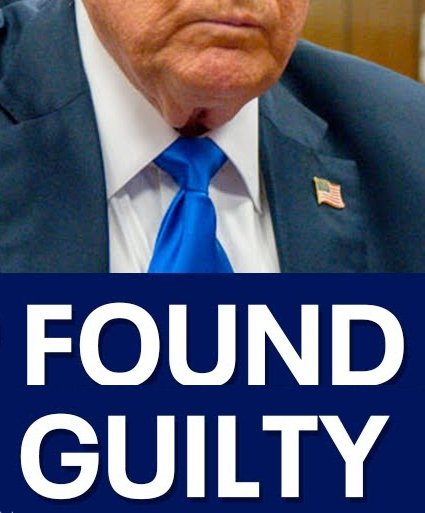
When citizens go to the ballot box—or when they deliberately choose to turn away so as not to endorse a rigged game—they consciously evaluate the ethical legitimacy of those who claim to lead them. Yet, the contemporary spectacle offers a bleak reality, where the very notion of integrity seems to have become an optional feature, if not an obstacle to a successful public career.
It has become deeply indecent to watch candidates for the highest national offices play cynically with judicial delays, multiply procedural appeals, and exploit loopholes in the legal calendar for the sole purpose of running in an election. If the vote favors them, the mandate they obtain then turns into a constitutional shield—a fortress of temporary immunity behind which they evade their criminal liabilities.
This instrumentalization of institutions distorts the representative function and instills an intolerable sense of impunity within society.
Restore dignity to public action
To restore a minimal level of dignity to public action, clear, absolute, and definitive rules must be set. Anyone holding a public mandate or seeking the people's vote who is found guilty of fraud, corruption, embezzlement, or any other serious breach of probity should be struck with a lifetime ban from holding public office. The sanction must be perpetual, for the betrayal of public trust is not a simple mistake that can be erased over time.
Allowing an elected official convicted of a crime to return to the political arena after a few years of forced retirement is tantamount to admitting that collective integrity is open to cheap compromise.
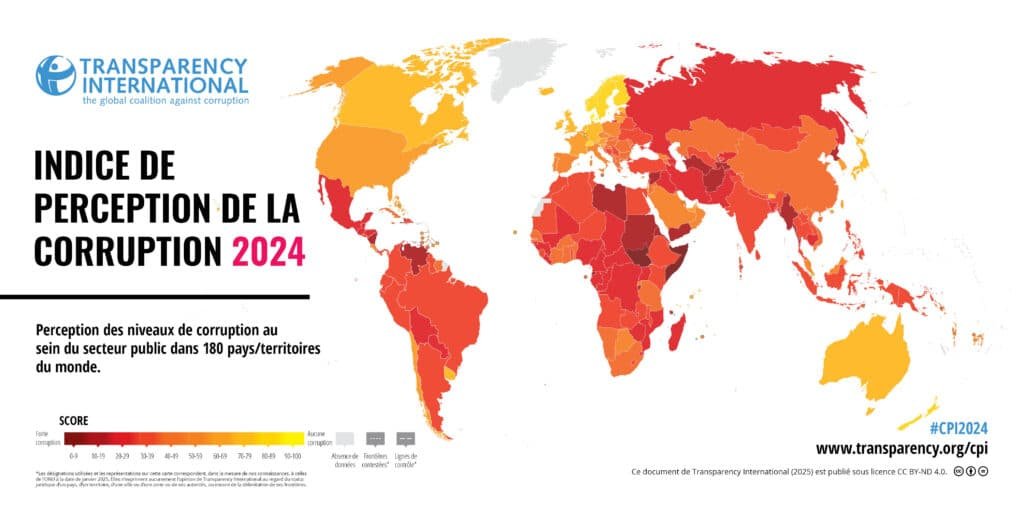
The hard data of our institutional landscape demonstrates that impunity is not a myth, but a systemic practice. Data analysis regarding white-collar crime among political leaders reveals that in France, over a hundred figures of national or local stature have been definitively convicted for breaches of public probity.intes à la probité publique.
The major problem lies not only in the commission of the offense, but in recidivism and the legal possibility of a comeback. As penal law currently stands, the periods of ineligibility handed down by the courts are almost systematically temporary, generally ranging between two and five years, with a theoretical cap set at ten years for the most serious offenses. This time limitation transforms the conviction into a mere career suspension—a period of media purgatory after which the individual can once again solicit the votes of a resigned or forgetful public. Several former ministers, deputies, and mayors have thus recovered high-level responsibilities after serving firm sentences for massive embezzlement of public funds or fictitious employment schemes.
o this legislative leniency is added the refined art of judicial strategy. The timeline of criminal proceedings objectively favors the powerful. Between the opening of an investigation into corruption charges and the delivery of a definitive conviction by the Supreme Court, a period of five to seven years frequently elapses. Throughout this time, the suspect benefits from the presumption of legality regarding their political actions and continues to hold office, vote on laws, or manage considerable budgets. Better yet, some use this period of reprieve to anticipate upcoming elections, run for new mandates, and obtain fresh electoral legitimacy that will serve as a political argument to denounce their ongoing legal trouble.
In the face of this ongoing denial of justice, implementing a lifetime ban on holding public office—as demanded by Ms. Le Pen in 2013 on Public Sénat, where she advocated for permanent ineligibility for any politician convicted of crimes committed in connection with their mandate—is the only proportionate response.
An ordinary citizen who commits serious misconduct in the course of their profession can be permanently banned from practicing their trade, managing a company, or working with vulnerable groups.
Why should the standards applied to those who draft the laws and embody national sovereignty be lower than those imposed on the rest of the population? The often-advanced argument that universal suffrage absolves the wrongdoing and that the people remain the sole judge of a candidate's morality is an intellectual sham. The ballot holds no power of absolution over the penal code.
A democracy worthy of the name must establish inviolable ethical safeguards to prevent the instruments of popular sovereignty from being hijacked by financial or political criminals. A lifetime ban on holding public office for fraudsters is not an act of revenge; it is a measure of institutional self-defense.
For the Christian who seeks to examine worldly structures in the light of Scripture, this demand for justice goes far beyond simple legal reform: it addresses a spiritual imperative to separate from and refuse compromise with iniquity.
Voici la traduction en anglais américain (US English) de ces paragraphes :
This requirement of integrity takes on an even deeper dimension, as it is rooted in the very character of God and in the clear instructions left by Scripture regarding human governance. The Bible is not neutral in the face of leadership corruption. From the Book of Kings to the major prophets, the condemnation of leaders who pervert justice, accept bribes, and oppress the people with false scales is a constant leitmotif.
King Solomon reminds us in Proverbs that a throne is established through righteousness, and that honest lips are the delight of kings. How, then, can a believer—without compromising their own conscience—cast their vote, lend their support, or offer public validation to individuals whose financial misconduct and procedural deceit are fully proven? Voting for a corrupt candidate under the pretext that they might otherwise defend good moral or societal values is a major theological contradiction. Integrity cannot be broken into pieces.
The biblical dimension of politics imposes upon Christians a duty of discernment and spiritual separation. The Apostle Paul, in his second letter to the Corinthians, poses a question that resonates powerfully in our political context: what fellowship has righteousness with lawlessness? Or what communion has light with darkness?
If we want our presence in the world to reflect the values of the Kingdom of God, we must stop being passive accomplices to a system that tolerates lies, fraud, and corruption within its ranks.
Refusing to associate with unjust leaders, refusing to endorse their campaigns, or refusing to justify their missteps out of partisan opportunism is an act of spiritual obedience. Christians must remember that their primary allegiance is to the King of kings, whose throne is founded on righteousness and equity. Partnering with corrupt individuals to gain earthly advantages or illusory protections is to repeat the mistake of Israel, which sought alliances in Egypt rather than relying on the Lord.
This spiritual stance requires a radical break with the cynical pragmatism that dominates today's political debates. Too often we hear that one must choose the "lesser of two evils," or that political efficiency justifies a few compromises with morality. Scripture teaches us the opposite: God does not need our compromises to accomplish His purposes.
The New Testament enjoins us to take no part in the unfruitful works of darkness, but instead to expose them. Applied to our responsibility as citizens, this implies that a candidate's honesty and uprightness must be an absolute prerequisite—an essential filter before any doctrinal or partisan consideration. If no candidate offers these minimum guarantees of probity, then militant abstention becomes the only option consistent with an authentic faith.
Biblical history also shows us that the corruption of leaders inevitably leads to the decline of the entire nation. When King Ahab and his wife Jezebel twisted the law to seize Naboth’s vineyard using false witnesses and manipulating the city elders, the entire nation suffered the consequences of divine judgment.
"Righteousness exalts a nation, but sin is a reproach to any people," affirms the Book of Proverbs. Promoting integrity by demanding the permanent exclusion of fraudsters is therefore not a moralizing whim, but a work of national preservation. By refusing to compromise on the probity of our representatives, we lay the foundations for a society where one's word carries weight, where the law protects the weak, and where institutions are no longer the playground of unscrupulous ambition.
It is at this price, and at this price only, that we can hope to see the emergence of a generation of genuine public servants—capable of governing with justice and restoring the broken bond of trust between the nation and its representatives. Our demand must be total, for divine justice knows no half-measures.
Mikaël Reale
Recent Comments