
The principle of causality.
Or when every action leads to a reaction.
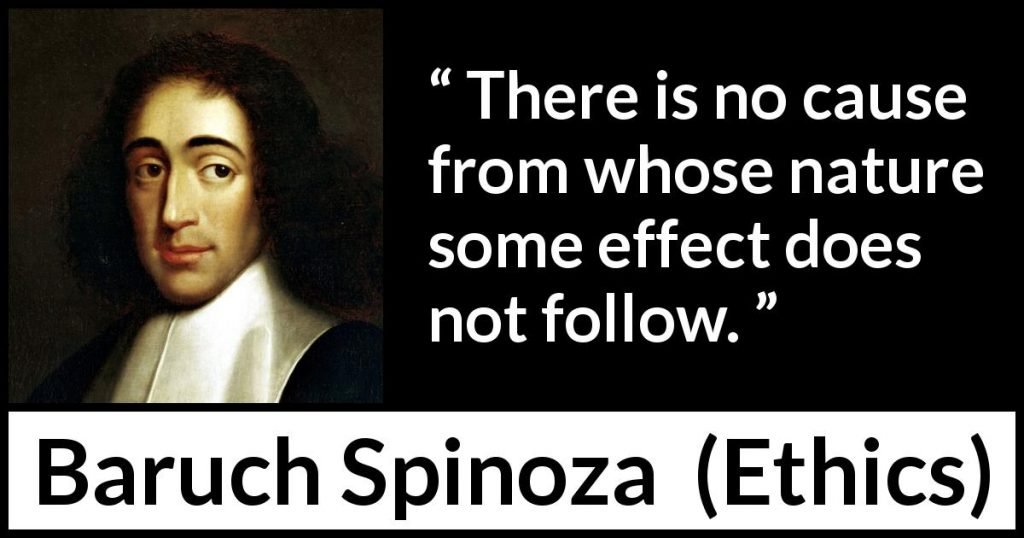
The principle of causality is stated as follows:
“Every phenomenon has a cause, and every cause has a
consequence.”
I have often heard people refute this principle in the name of God’s grace, which ensures that He has acquitted us of the punishment that should have been imposed on us. We were sinners, and yet,
saved by grace, we will not suffer hell, the price of our sins.
I’m sorry to contradict this idea, which some might find comforting, though I in no way question salvation through faith.
First, as we’ve seen previously, the consequence of the Fall was indeed carried out—on Jesus.
Second, our salvation is not only the result of Jesus’ sacrifice on the cross, but also of our faith in that sacrifice. Therefore, under no circumstances can we think that grace can override the eternal principle of causality. To convince ourselves of this, we can read the following passages.
“Cast your bread upon the waters, for you will find it after many days; give a portion to seven, or even to eight, for you do not know what misfortune may come upon the earth.” Ecclesiastes 11
“Give to him, and let not your heart be grudging toward him; for because of this, the Lord your God will bless you in all your work and in all your undertakings.” Deuteronomy 15:10
“Whoever is kind to the poor lends to the Lord, and He will repay him according to his deed.” Proverbs 19:17
“Whoever sows iniquity reaps iniquity.” Proverbs 22:8
“And whoever gives even a cup of cold water to one of these little ones because he is my disciple, truly I tell you, he will by no means lose his reward.” Matthew 10:42
“Let us not grow weary of doing good, for in due season we will reap, if we do not lose heart.” Galatians 6:9
“For God is not unjust; He will not forget your work and the love you have shown for His name, as you have served and continue to serve the saints.” Hebrews 6:10
These are indeed passages from both the Old and New Testaments, for the “Principles” of the Kingdom transcend the barrier we have wrongly sought to erect between these two parts of God’s Word.
By ignoring these principles, under the pretext of grace, we have forced the body of Christ to suffer for centuries the consequences of its ignorance. “My people are destroyed for lack of knowledge; for you have rejected knowledge.” Hosea 4:6
I would like to share with you here a revelation that my wife and I received, which led me to reflect on causality.

For years, we have seen friends around us—in the church—die of cancer. In every single one of these cases, these were people who were true Christians, born again, in love with the Lord, full of faith and confidence in God’s promises of healing. These friends were supported by congregations well-versed in intercession and spiritual warfare. Chains of fasting and prayer were organized for months. Words were received regarding healing. But here’s the thing: all these people have passed away!
While we were praying for the most recent one—a friend particularly dear to our hearts—my wife received that the healing was not coming because of division. Yet this friend was certainly the most committed to unity that anyone could be. I even had the feeling that sometimes it was too much! I have never seen anyone love the body of Christ as a whole to such an extent.
Submitting to the Spirit in our intercession, we delved deeper into this word until the Lord explained to us what He was saying:
“It is not her who is at fault, but the Body in general. There is so much division, slander, mocking words, and contempt within the Body that it gives Satan grounds to spread sickness among My people and allow it to flourish despite your prayers.”
This principle is explained to us by the apostle Paul in 1 Corinthians 11:27–31: “Therefore, whoever eats the bread or drinks the cup of the Lord unworthily will be guilty of sinning against the body and blood of the Lord. Let each one, then, examine himself, and so let him eat the bread and drink from the cup; for whoever eats and drinks without discerning the Lord’s body eats and drinks judgment upon himself. That is why there are many among you who are weak and sick, and why so many have died. If we were to judge ourselves, we would not be judged.”
What does it mean to “eat the bread or drink the cup of the Lord unworthily”?
The purpose of the Lord’s Supper is to remember the most essential aspect of Jesus Christ’s time on earth. This aspect is neither a teaching nor a story of miracles. It is the redemptive sacrifice He made for us—all who believe in Him—and it is given freely.
Paul therefore warns us against the danger of despising those to whom this salvation is addressed, when we ourselves are its beneficiaries. He states this precisely in the following text:
“For whoever eats and drinks without discerning the Lord’s body eats and drinks judgment upon himself. ”
Paul tells us that there are sick people and even those who have died in the church because of our inability to discern the body. Once again, this is a principle of causality that is, moreover, fully at the heart of the New Testament.
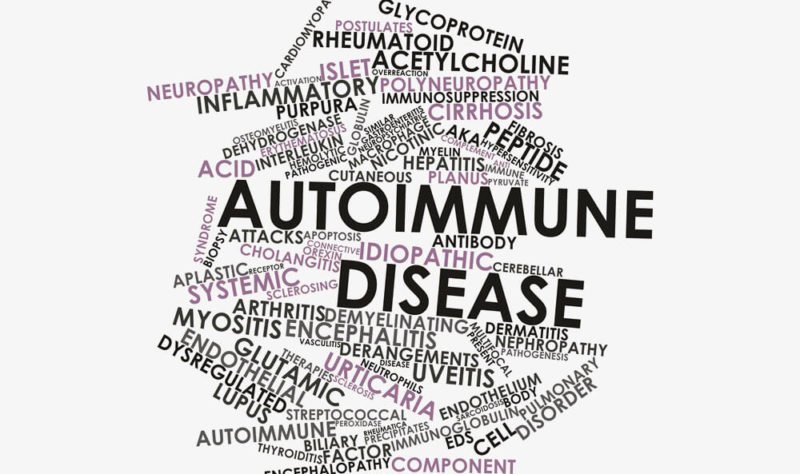
Division, a lack of love, and a lack of compassion are like autoimmune diseases that destroy the Body of Christ!
We could pray for centuries without seeing God’s promises come to pass if we do not take this principle into account. In fact, God simply cannot answer our prayers.
That is why He tells us from the very beginning that the promises associated with His Kingdom will not be fully accessible to those who do not apply the principles established from all eternity.
This is also why our congregations so rarely see these promises fulfilled: “These are the miraculous signs that will accompany those who have believed: in my name, they will cast out demons; they will speak in new tongues; they will pick up poisonous snakes; and if they happen to drink any deadly poison, it will not harm them. They will lay their hands on the sick, and they will recover.” Mark 16:17–18
[1] (Baruch Spinoza, Éthique, « I, axiome 3 »)
Recent Comments