
IA few years ago, a young man very close to me went through a divorce—one he did not want but to which his own attitude had greatly contributed. Some time later, I shared this situation with a pastor I knew. His response was harsh: “He must win back his wife or remain single and continue to serve God faithfully. If he remarries, he will commit adultery in turn.”
I thought such declarations belonged to a bygone era, but recently, I heard the same things again from several people. I have seen so many suffer—alone, abandoned, forced to choose between serving their God in solitude or remarrying and being excluded from service, or even from the church.
So tell me, is the breakdown of a marriage such a sin that it cannot be erased by the grace of God?
A Heavy Question of Meaning and Suffering
The question of remarriage after an unwanted divorce touches on one of the most painful trials a believer can face. It raises tensions between the divine ideal of marriage and the broken reality of our lives—marked by sin, suffering, and sometimes injustice. The Bible is far from silent on this issue; it speaks with a voice that is both firm and tender, reminding us that while God hates divorce, He never abandons its victims.
Marriage, as God designed it, is a sacred covenant, a reflection of His faithful love for His people. Genesis 2:24 reminds us that a man and his wife become “one flesh,” and Jesus reaffirms this truth in Matthew 19:6: “What God has joined together, let no man separate.” Yet, in a fallen world, this covenant is sometimes broken—not by choice, but through betrayal, abandonment, or violence. So what do we do when the ideal collides with reality? How do we reconcile God’s holiness with His compassion for those who suffer?
Marriage: A Divine Ideal Confronted by Human Fragility

Marriage is far more than a social contract or legal union—it is a spiritual covenant, a commitment before God and humanity. Ephesians 5:22-33 describes it as an image of Christ’s love for His Church: sacrificial, patient, and protective. But this beauty is often obscured by our weaknesses, selfishness, and sins. The Bible does not deny this reality; it acknowledges that human hearts are capable of betrayal, hardness, and unfaithfulness.
Yet God does not leave us without hope. Even in our failures, He offers a path to redemption. Marriage remains an ideal to pursue, but Scripture also admits that some ruptures are inevitable—not because God desires them, but because He knows the hardness of our hearts. In these moments, His grace becomes our refuge, and His Word, our guide..
Divorce in the Bible: Between Permission and Tragedy
The issue of divorce is addressed in several biblical passages, and a careful reading reveals a tension between the severity of the law and God’s mercy. In the Old Testament, Deuteronomy 24:1-4 permits divorce in cases of “indecency,” a term whose exact meaning is debated but suggests a serious breach of the covenant. Later, the prophet Ezra, faced with mixed marriages threatening Israel’s spiritual identity, even orders divorce as a protective measure (Ezra 9-10). These texts show that in certain contexts, divorce is not merely tolerated but necessary to preserve faithfulness to God.
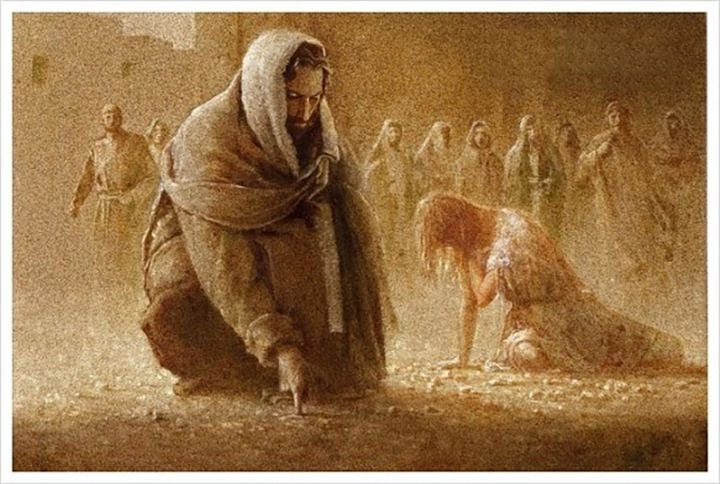
n the New Testament, Jesus appears to take a stricter stance, declaring that “anyone who divorces his wife, except for sexual immorality, and marries another, commits adultery” (Matthew 19:9). Yet His words are not a blanket condemnation. They uphold the divine ideal while recognizing that unfaithfulness—whether physical or spiritual—breaks the marital covenant. Paul, in his first letter to the Corinthians (7:15), addresses the abandonment by an unbelieving spouse and acknowledges that in such cases, “the brother or sister is not bound.” In other words, if one spouse chooses to leave the covenant, the other is not obligated to remain in a unilaterally broken relationship.
These passages do not treat divorce as a trivial option, but they acknowledge that it can sometimes be a necessary evil—a protection for the innocent. The tragedy of divorce lies not only in the rupture itself but in what caused it: sin, selfishness, or hardness of heart. Yet even in these circumstances, God does not abandon us. His grace is wide enough to cover our failures and strong enough to lift us up.
Remarriage: A Question of Grace and Restoration
The question of remarriage may be the most delicate of all. Evangelical tradition, drawing on passages like Matthew 5:32, has often taught that remarriage after divorce is equivalent to adultery. But this interpretation must be nuanced in light of the full counsel of Scripture—and above all, God’s compassion.
If one spouse has chosen to break the marital covenant despite efforts to preserve it, the other cannot be held responsible for that rupture. The grace of God does not exclude the possibility of rebuilding one’s life.
Remarriage, in such a context, can be seen not as a transgression but as a step toward restoration. Of course, this decision should not be made lightly. It must be the fruit of a sincere search for God’s will, self-examination, and spiritual guidance.
The Bible shows that God permits remarriage in certain cases. These exceptions are not loopholes in divine law but expressions of His mercy. They remind us that God does not condemn us for what we have suffered but offers a path to healing and reconstruction.
And when we have “missed the mark”—the very definition of sin—and are repentant for having destroyed our marriage, if that is the case, He is full of mercy, allowing us to do better next time, after understanding, changing, and, if possible, repairing our mistakes.
The Compassion of God: The Foundation of Every Answer
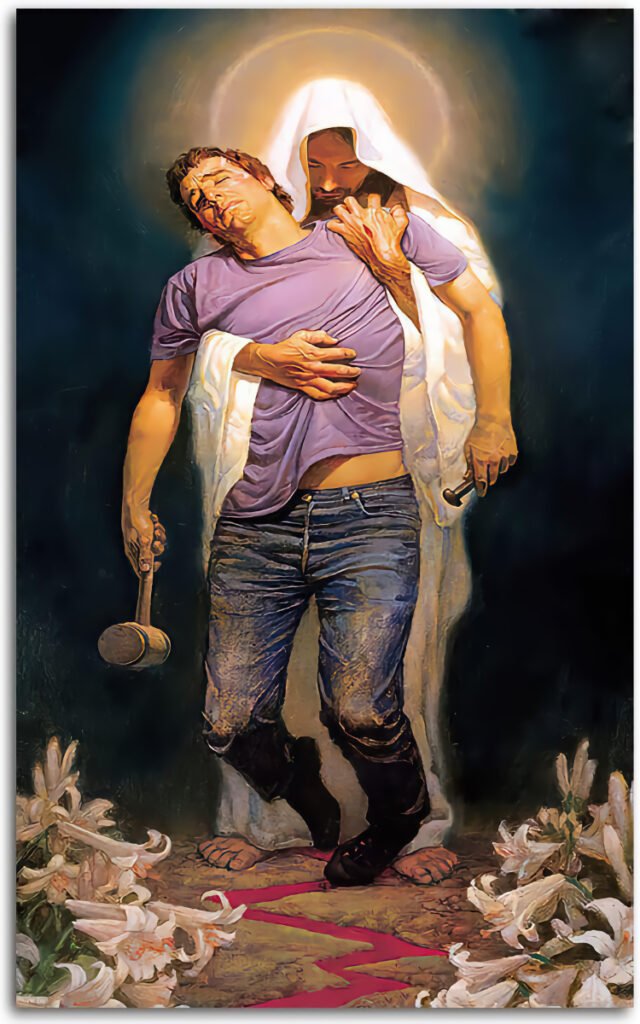
At the heart of this reflection lies an essential truth: God is a God of compassion. Psalm 34:18 assures us that “The Lord is close to the brokenhearted,” and Matthew 11:28 invites us, “Come to me, all you who are weary and burdened.” The grace of God is not a license to ignore His commands, but it is an invitation to live in the freedom and peace He offers, even after failure.
If you are considering remarriage, do so in prayer, seeking first the kingdom of God and His righteousness. Surround yourself with wise spiritual counselors who can help you discern whether this step aligns with God’s will for your life. And above all, remember that God does not judge you based on what you have suffered or done but on how you trust Him to restore you.
The Conclusion is in a Response Rooted in the Love of God
Friends, the Bible does not give us ready-made recipes for complex situations like the breakdown of the family unit. It reveals a God who sympathizes with our suffering, who hates divorce but loves the divorced, who despises unfaithfulness but forgives the unfaithful. If you have been the victim of an unwanted divorce, know that God is not punishing you and that He reaches out to lift you up and restore you. If you have been a poor spouse and led your marriage to divorce, He wants to convict you of sin, transform you into a new creation, and offer you another chance to live out the wonderful covenant that is marriage.
May your decision be guided by His Word, His Spirit, and the wisdom of those around you. And above all, remember that His grace is sufficient for you. As the apostle Paul writes in 2 Corinthians 12:9: “My grace is sufficient for you, for my power is made perfect in weakness.” Your story is not over. God is writing a new chapter, and He invites you to trust Him, step by step.
Mikaël REALE